Lattice Training
Training and recovery equipment from the people who spend thousands of hours helping other climbers.
Filters
Angled edges let you pull harder
- Fingers
- Add weights
Clips plates on for weighted training
- Adding weight
- Portable
Precise low-load wrist training
- Wrists & forearms
- Add weights
Micro plates from 0.25 to 1kg
- Adding weight
- Portable
Bundle for basic weighted training tools
- Bundle & Save
- Portable
The full off-wall training setup
- Bundle & Save
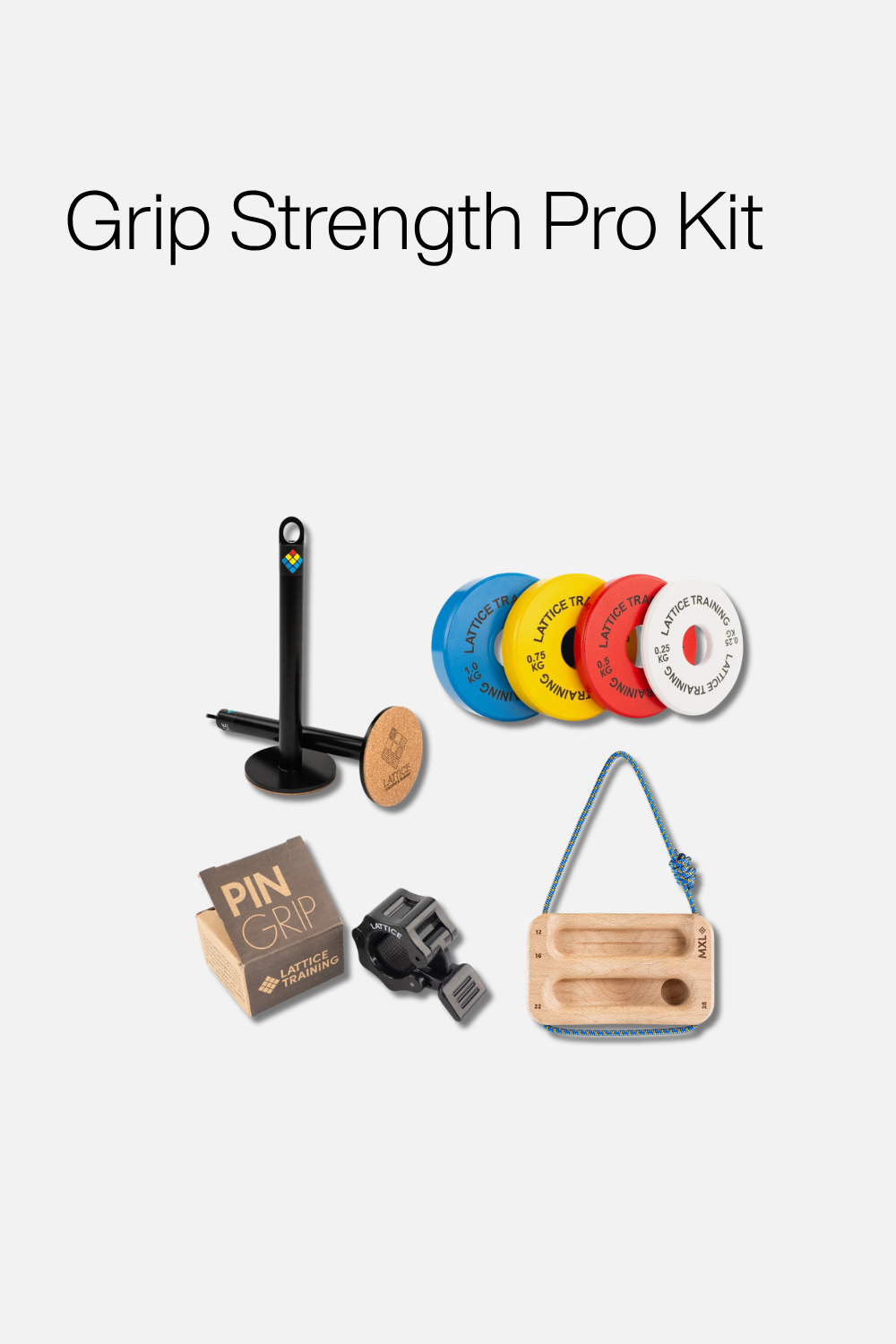
Serious grip and pinch training setup
- Bundle & Save
Loads the palm for sloper strength
- Wrists & forearms
- Add weights
Four pinch sizes in aluminium
- Grip & pinch
- Add weights
Builds finger extensor strength, seven levels
- Antagonists
- Portable
Foam ball for quick forearm warm-ups
- Wrists & forearms
- Portable
Five bands for warm-ups and mobility
- Mobility & recovery
- Portable
Cork massage roller for sore forearms
- Mobility & recovery
- Portable
A first home setup for climbers
- Bundle & Save
Everything for building finger strength
- Bundle & Save
Forearm/wrist training with savings
- Bundle & Save
- Add weights
Smooths calluses before they tear
- Skin
- Portable
Assist pull-ups and build lock-offs
- Pulling
- Portable
Wider portable board, four grip types
- Fingers
- Portable
Mounted wooden board, three benchmark edges
- Fingers
- Mounted
Cork mat with stretch measuring scales
- Mobility & recovery
- Portable
Measures and tracks your stretching progress
- Mobility & recovery
- Portable
Keeps fingers and elbows healthy
- Bundle & Save
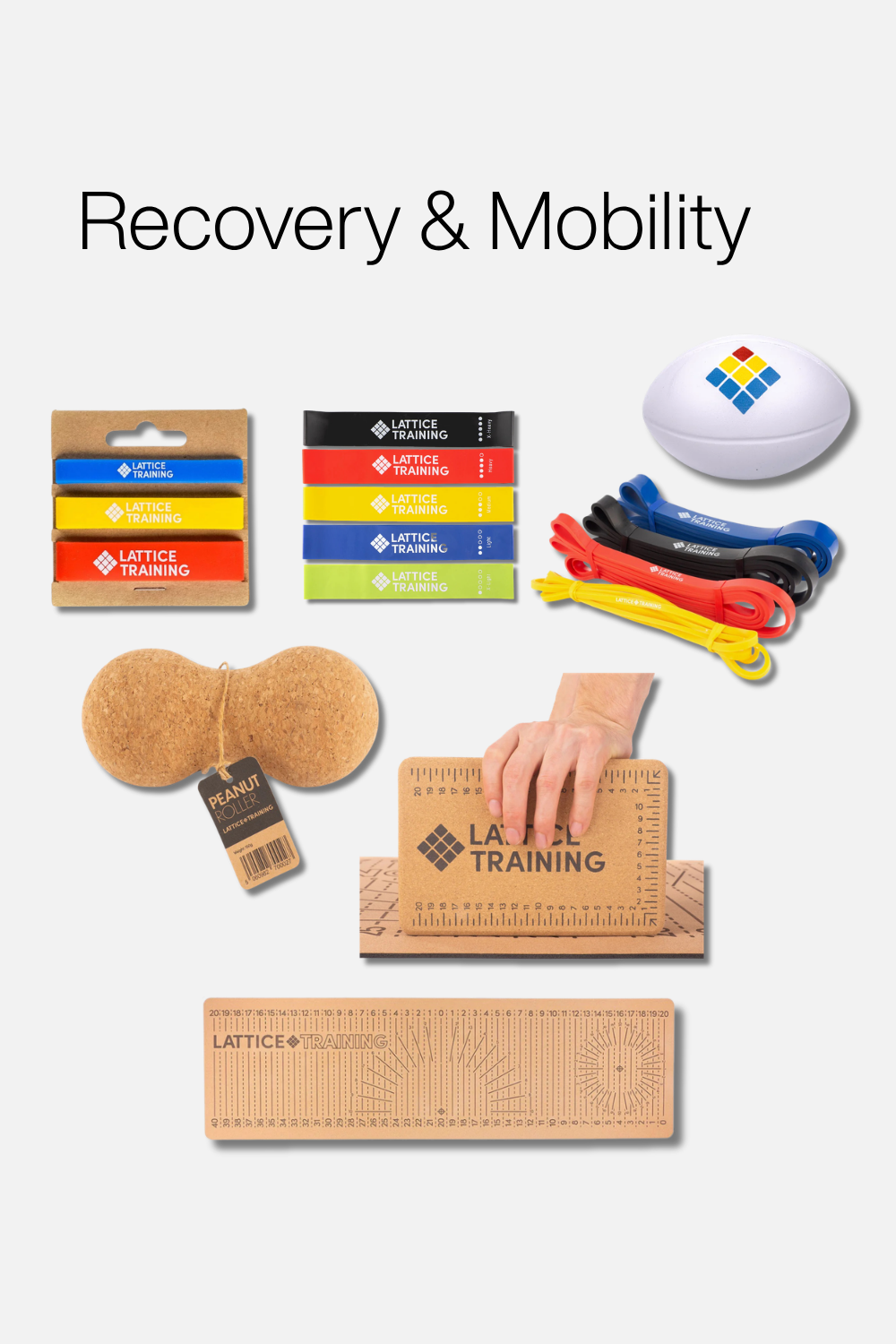
Tools for recovery between sessions
- Bundle & Save
Structured stretching and mobility tools
- Bundle & Save
Bundle to help you recover after
- Bundle & Save
- Portable
FAQs for Lattice Training
New to training? Start here.
Why train wrists and antagonists?
Climbing hammers the finger flexors and leaves the extensors, wrists and shoulders behind. That imbalance drives a lot of elbow and wrist pain.
Ten minutes of band, roller or ring work twice a week keeps things even.
How often should I finger train?
Two short sessions a week suits most climbers, with a rest day between and never back to back. Finger tissue adapts slowly, and training more often mostly adds injury risk without much extra gain.
Do I need to add weights?
Boards and bands work with bodyweight or band assistance. Lifting blocks and rollers are built to be loaded, so you'll also want a Lifting Pin and some plates.
The "Add weights" tag on each card tells you which is which.
What should a beginner get?
A warm-up and antagonist tool such as the Warmup Ring, Extensor Bands or Foamie, plus a forgiving board with larger edges like the Mini Bar, La Baguette, or the Triple Rung's 20mm and 45mm rungs.
Leave small edges and dedicated lifting blocks until you've climbed a year or so with no finger pain.
Mounted hangboard or portable trainer?
A mounted board gives you a permanent, consistent setup at home. Portable boards like the Mini Bar and La Baguette travel and hook onto a bar or a band, with a little less stability.
If you have a doorway or beam and train mostly at home, go mounted. If you travel or share a space, go portable.
$9.95 Flat Rate Shipping
Faster options available at checkout, read our Shipping Policy.
Want to talk to someone?
Message us via the chatbox in the bottom right or give us a call at 0422 498 078
Shop Location
Find information about our Toowoomba shop here.
Happy Biner acknowledges the Giabal and Jarowair people as the Traditional Custodians of Toowoomba, the lands on where we meet, work and climb.
We pay our respects to Giabel and Jarowair Elders past, present and emerging.